
Your SEO isn’t failing because the writing is bad. It’s failing because the structure underneath was never built.
How To Build a Topical Map That Actually Wins Cases. Koray Tuğberk Gübür’s framework, adapted for personal injury law firms, with the structural formula, the ten-step build process, and a full worked example for a Brooklyn PI firm.
This is the framework I use to fix the problem every PI managing partner brings me. The SEO investment is real. The technical work looks fine. The content map looks fine. The links keep coming in. And yet the rankings won’t move, or they collapse after every Google update and signed cases dry up for two or three months at a time.
The structural fix is in this guide. Twelve sections. Forty-minute read if you sit with it. The formula, the five fundamentals, the ten-step creation process, the Brooklyn worked example, and the ten most common mistakes I see PI firms make with their topical maps.
What’s actually in the Guide.
12 sections · ~40 minute cover-to-cover read · Written for PI managing partners and the people who handle their SEO programs.
12 chapters · ~40 minute cover-to-cover read · Section titles are working drafts pending final guide layout.
-
1
What a topical map actually is, and what it isn’t. Why the spreadsheet your agency calls a “topical map” doesn’t qualify, and what Koray’s Semantic Content Network definition replaces it with.
-
2
The Topical Authority formula. (Historical Data × Topical Coverage) ÷ Cost of Retrieval, what each variable does, and why most firms optimize one or two while the denominator suffocates everything. Includes the full variable breakdown and the four-question diagnostic for which variable is bottlenecking your firm.
-
3
The three axes: Vastness, Depth, Momentum, and why weakness on any one of them caps the other two.
-
4
The five fundamentals: Central Entity, Central Search Intent, Source Context, Core Section, Outer Section, and why building the Outer Section first is the biggest mistake I see.
-
5
The building blocks: Entities, Attributes, Predicates, and the lexical semantics layer Google’s OIE pipeline actually reads.
-
6
Query templates and document templates, including the four layers Google interprets a single query through (Definition, Aspect, Theme, Phrasification).
-
7
The SERP Triad, why “AI Overview optimization” sold as a separate service is a vocabulary problem, not a methodology. AI citations depend on classical document ranking.
-
8
The ten-step creation process, the operational sequence I run, with QDP / QDH / QDS hierarchy, the local-by-topic bridge, and the updateness rule.
-
9
A full worked example, a Brooklyn PI firm: central entity, source context, full URL structure for the Core Section, document template applied to a real rear-end collision page, and the query template grid it serves. Includes the complete URL hierarchy, the live document template, and the query grid you can lift and adapt to your own jurisdiction.
-
10
The ten mistakes I see most often. Each one costs PI firms real money, and each one is fixable if you know what you’re looking at. Each mistake is paired with the specific structural fix and the order to apply them in.
-
11
How to know it’s working. Three signals partner-side leaders can read themselves, independent of any agency report.
-
12
Synthesis and closing. How the structural method translates to any service business with comparable semantic depth, and the order to apply it in the first 90 days.
Why the structure underneath matters more than the words above it.
Most PI SEO programs fail for one of two reasons. Either the Topical Authority formula was attacked on a single variable while the others were ignored, or the cost-of-retrieval denominator quietly suffocated everything being built. Both failures show up first in the query network, which is why the keyword research method and the wider personal injury SEO playbook are the two references this Guide assumes above the line. Both are fixable. Neither is what your last agency told you.
The Guide draws directly on the work of Koray Tuğberk Gübür, the Turkish researcher whose Topical Authority framework reshaped how serious SEOs think about content structure. It also draws on the named patent work the framework rests on: Anand Shukla’s “Search with Stateful Chat” patent (the foundation of Google’s AI Search Mode), Boris Dadachev’s fact-versus-opinion classification patent, Navneet Panda’s Site Quality framework, and the May 2024 Content Warehouse API leak that confirmed signals like siteAuthority, contentEffort, and the Navboost click attributes.
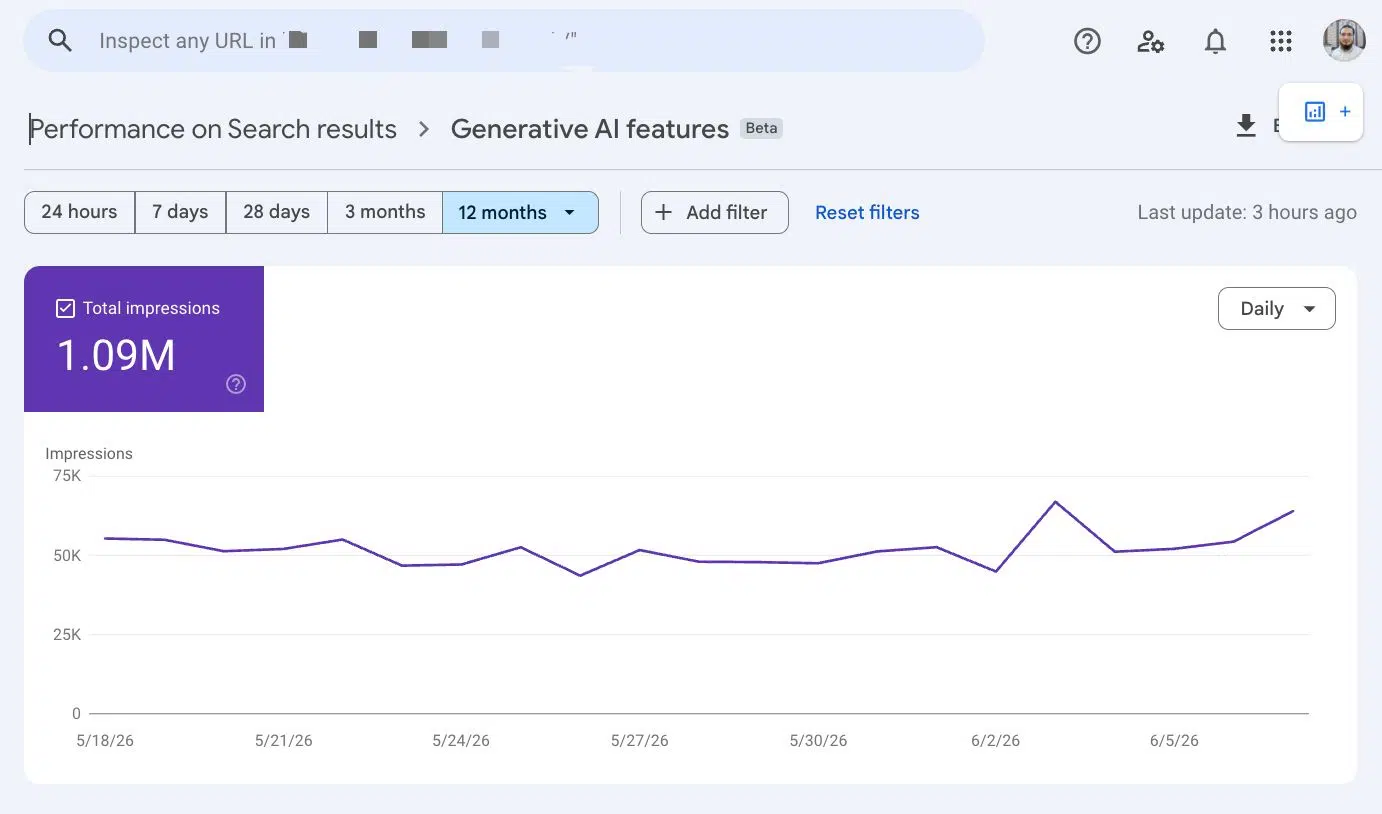
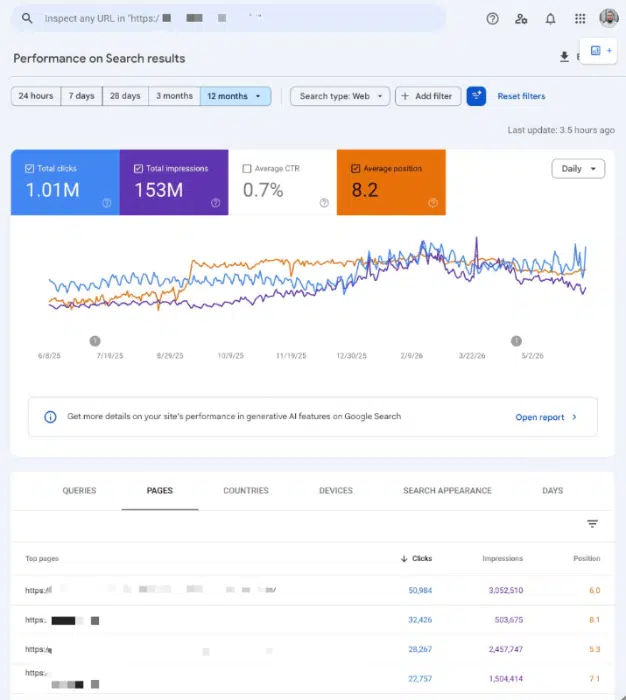
Branded and non-branded GSC impressions for a Brooklyn PI firm engagement, 14 months of data. Firm name redacted. The parallel rise is the signal Section 11 of the Guide names as the cleanest read on whether a topical map is doing its job.
The PI examples are the worked-example vertical. The structural method translates to any service business with comparable semantic depth.
Who the Guide is built for.
- You’re a managing partner or founder at a PI law firm
- You’re a CMO or marketing director inside a PI firm
- You handle SEO in-house at a PI firm and your work is being undone by an external agency
- You’re an agency operator serving PI verticals and want the structural method documented
- You’re a peer SEO operator studying semantic SEO seriously
- You’re looking for a beginner’s SEO 101
- You want a content marketing strategy template
- You’re after a list of keyword research tools
- You want a quick-fix SEO checklist
If you’ve been burned at least once by an agency that sold you keyword volume instead of signed cases. You’re the reader this Guide was written for.
Who built it.

Behzad Hussain is a senior SEO strategist for personal injury law firms in the United States, the United Kingdom, and Canada. He came to SEO from auditing: ten years of Chartered Accountancy and three and a half years of external audit work before five years of semantic SEO practice.
His published research includes Schema Markup Adoption Dataset: 500 Personal Injury Law Firm Websites (2026), indexed on ResearchGate, SSRN, and Zenodo. The applied methods behind it are documented across his personal injury SEO guides. He’s a Certified Semantic SEO Expert through Koray Tuğberk Gübür’s certification programme, and a member of both Koray Tuğberk Gübür’s private semantic SEO community and Olaf Kopp’s SEO Thought Leadership community.
He works with PI law firms at three engagement depths: Diagnostic, Growth System, and Fractional Strategist. The Guide is the structural method he teaches at the beginning of every engagement.
Questions, quick.
Is it really free?
Is this guide only for PI firms?
How long is the Guide?
What happens to my email after I sign up?
Will you ever sell or share my email?
Send me the Guide.
PDF in your inbox within 60 seconds.
Your guide is on the way.
The PDF is flying to your inbox right now. It will arrive from info@behzadhussain.me in less than 60 seconds.
If you don’t see it, check your spam folder and mark it “Not Spam” so the follow-up emails arrive in your primary inbox.
Skip the guide and book a 30-minute Diagnostic call. Look at your firm’s specific structure with Behzad and get the prioritized roadmap directly.
Book a Diagnostic call →